
CPF Policy Changes 2026 — What Changed and What It Means for You
CPF contribution rates, retirement sums, MediSave limits, and interest rates — what actually changed in 2026 and what working Singaporeans should do about it.
**Disclaimer:** This article is for general information only. It is not financial, tax, or legal advice. CPF rules are complex and individual circumstances vary. Verify all figures with CPF.gov.sg and consult a qualified financial adviser for personal decisions.
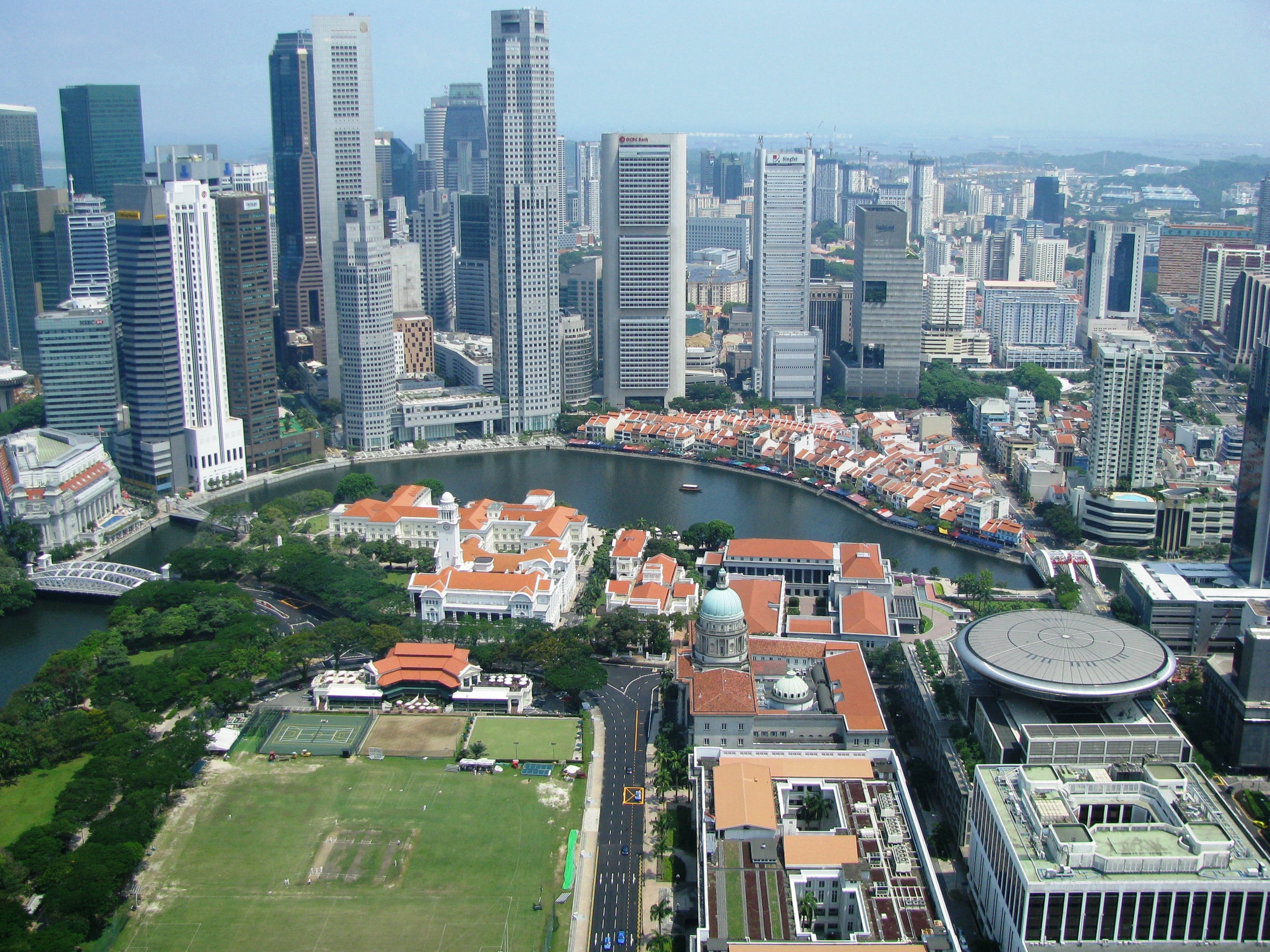 *Singapore's Central Business District — CPF policy changes in 2026 affect every working resident in this city. Credit: Terence Ong, public domain, via Wikimedia Commons.*
The Short Version
CPF changes every year — contribution rates shift, retirement sums go up, and the rules around what you can do with your money evolve. Most working Singaporeans don't track these changes closely until they hit a milestone (turning 55, buying a flat, planning retirement). This guide covers what actually changed for 2026 and what it means in practical terms.
CPF Contribution Rates 2026
Standard Rates (Employees ≤55 years old)
For employees earning more than S$750/month and aged 55 and below:
**Ordinary Wage ceiling:** S$6,800/month (unchanged from 2024) **Additional Wage ceiling:** S$102,000 minus total ordinary wages for the year
Senior Worker Rate Increases (2026 Phase-In)
The government has been gradually raising CPF contribution rates for older workers since 2023. For 2026:
**What this means:** If you're above 55 and still working, slightly more goes into your CPF each month. The increases are employer-side, so your take-home pay doesn't decrease — but your employer's cost goes up marginally. Check the current CPF contribution rate table before making payroll or retirement decisions, because CPF rates are updated by cohort and year.
Retirement Sums 2026
The retirement sums apply to CPF members turning 55 in 2026. They increase annually to keep pace with inflation and rising living costs.
Key Change: ERS Increased to 4× BRS
Previously the ERS was 3× BRS. From 2025 onwards (announced in Budget 2025), the ERS cap was raised to 4× BRS. This means members who want to put more into CPF LIFE for higher monthly payouts now have more headroom.
**Practical impact:**
- If you're turning 55 in 2026 and have more than S$213,000 in your SA+OA, you can now keep up to S$426,000 in your Retirement Account
- Higher RA balance = higher CPF LIFE monthly payouts in retirement
- This is optional — you're not required to top up beyond BRS
What Happens When You Turn 55
- Your Special Account (SA) is closed
- SA balance transfers to your new Retirement Account (RA), up to the FRS
- Any excess above FRS goes to your Ordinary Account (OA)
- You can withdraw amounts above BRS from your OA (subject to conditions)
Basic Healthcare Sum (BHS) 2026
The BHS is the MediSave contribution cap — once your MediSave reaches this amount, further contributions overflow to your SA (if under 55) or OA (if 55+).
**Why it matters:** If your MediSave is already at the BHS, additional MA contributions go to your SA/OA instead. This is relevant for high earners and those receiving large bonuses. Confirm the current BHS on CPF or MOH before acting, because the healthcare cap can be reviewed annually.
CPF Interest Rates
CPF interest rates have a guaranteed floor, but actual rates can be higher based on market conditions.
Extra Interest
**Effective rates for members 55+:**
- First S$30,000: up to 6% on SA/MA/RA, up to 3.5% on OA
- Next S$30,000: up to 5% on SA/MA/RA, up to 3.5% on OA
 *HDB flats — most Singaporeans use CPF OA funds to service their housing loans. Credit: Zairon, CC BY-SA 3.0, via Wikimedia Commons.*
What You Should Actually Do
If you're under 55:
- **Check your SA balance.** If it's growing well, the 4% floor rate is hard to beat risk-free. Consider whether voluntary top-ups make sense for your situation.
- **Voluntary top-up tax relief.** You can claim up to S$8,000 in tax relief for topping up your own SA/RA, plus another S$8,000 for topping up a family member's account. Total: S$16,000 in tax relief per year.
- **OA for housing.** Remember that OA funds used for housing earn 2.5% in CPF vs whatever your mortgage rate is. The opportunity cost calculation matters.
If you're approaching 55:
- **Understand the SA closure.** Your SA will be closed and funds transferred to RA (up to FRS) then OA. Plan accordingly.
- **Consider the ERS.** With the new 4× BRS cap (S$426,000 for 2026 cohort), you can lock in more for higher CPF LIFE payouts — but only if you don't need the liquidity.
- **Withdrawal planning.** Amounts above BRS in your RA can be withdrawn, but consider whether CPF LIFE payouts serve you better than a lump sum.
If you're a senior worker (55+):
- **Higher employer contributions.** Your CPF contributions went up slightly (employer-side). This means more going into your accounts without reducing take-home pay.
- **RA top-ups.** You can still top up your RA to the ERS for higher CPF LIFE payouts and tax relief.
Common Questions
"Should I do a voluntary top-up?"
It depends on your tax bracket and liquidity needs. The tax relief is most valuable if you're in a higher tax bracket (17.5%+ marginal rate). But money in SA/RA is locked until 55/retirement — don't top up if you might need the cash.
"Is CPF LIFE worth it vs withdrawing?"
CPF LIFE provides guaranteed monthly income for life. The breakeven is roughly 80–85 years old (varies by plan). If longevity runs in your family and you want certainty, CPF LIFE is hard to beat. If you have other income sources and prefer flexibility, partial withdrawal may suit you.
"What about SA shielding?"
SA shielding (using OA to buy property to protect SA from being used for housing) is a strategy some use to preserve the 4% SA interest rate. CPF has not explicitly banned it, but the rules around what counts as "excess" have tightened. Consult a financial adviser if considering this.
Key Dates 2026
Sources
- CPF.gov.sg — Contribution Rate Tables
- CPF.gov.sg — Retirement Sum Scheme
- CPF.gov.sg — Interest Rates
- MOF — Singapore Budget 2025/2026 announcements
- MOH — Basic Healthcare Sum announcements
- MOM — Senior Worker CPF Contribution Rates
*Last reviewed: May 2026. CPF rules change annually — verify all figures at CPF.gov.sg before making financial decisions.*


